01 — Rent by the Day, Not by the Year
Events do not run on annual leases, so neither do our hubs. You book the exact window your production needs, whether that is a long weekend for a single festival or a rolling block across a summer touring circuit. There are no wasted months paying for empty floor between shows and no scramble to offload a commitment that outlived its purpose. Because the model flexes with your calendar, budget lines stay tied to real activity rather than idle square metres. That flexibility lets small independent organizers and large touring operations use the same base on their own terms, scaling space up for a headline build and releasing it the moment the trucks pull away from the site.
02 — A Location That Cuts the Drive
Sitting inside the Antwerp logistics belt puts your gear minutes from the ring road, the port, and the main corridors that touring convoys already travel. That geography quietly removes cost and stress from every movement. Drivers can drop overflow on the inbound run instead of doubling back, couriers reach the hub without threading through congested city centres, and last-mile shuttles to the event site stay short and predictable. Fuel, driver hours, and the risk of missing a load-in slot all shrink when the staging base is genuinely close to where the action happens. For international crews, the proximity to major transport links also makes the hub an easy first stop after a long haul across the continent.
03 — Secure Holding You Can Trust
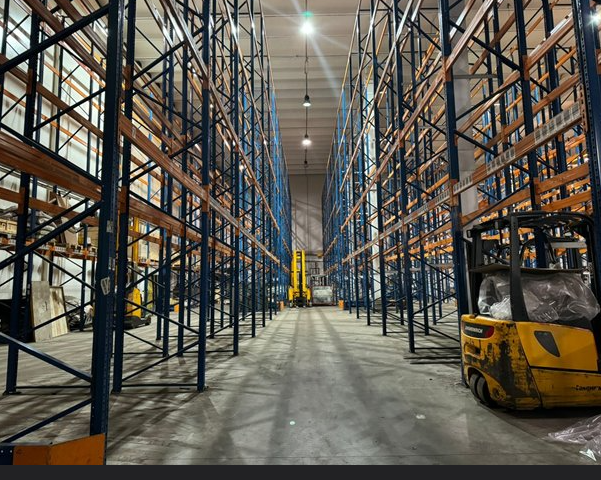
Festival freight is valuable, often irreplaceable on short notice, and easy to damage if it sits in the wrong conditions. Our hubs give that gear a controlled home with monitored access, disciplined check-in and check-out, and enclosed space that keeps weather-sensitive rigs, electronics, and branded structures out of the rain and out of sight. Reusable stage systems and merchandise stock rotate between shows without the wear of endless truck loading, and nothing important is left leaning against a fence overnight. Because every item is received, recorded, and placed with intent, teams always know what is on hand and what has already gone out, which turns storage from a risk into genuine peace of mind during the busiest weeks.
04 — Faster, Calmer Load-In
Most events lose their worst hours at the gate, where too many trucks arrive at once for a site that can only swallow freight in sequence. Staging materials at a nearby hub lets you pre-sort, pre-kit, and phase deliveries so the site receives exactly what it needs, exactly when it needs it. Rigging goes first, decor follows, merchandise waits in reserve until doors approach. That controlled inflow keeps the dock clear, the crew focused, and the schedule intact, replacing the usual jam of idling vehicles with a smooth, planned rhythm. When load-in is calm, everything downstream benefits, from crew morale to the quality of the finished build the audience finally sees.
05 — One Base for the Whole Crew
Modern events pull together many partners who rarely share a single point of coordination: stage builders, sound and light suppliers, caterers, brand activation teams, and merchandise vendors all move their own freight on their own timelines. Consolidating that activity into one organized hub gives everyone a shared, visible base to work from. Inventory stops hiding in scattered trucks and venue corners, dispatch planning gets cleaner, and cross-supplier handovers happen in a place designed for them. The result is fewer duplicated deliveries, less finger-pointing when something goes missing, and a level of inventory clarity that a fragmented setup simply cannot match, especially when several productions overlap in a packed festival season.
06 — A Smoother, Safer Strike
The strike is where tired crews, tight venue hand-back deadlines, and expensive gear collide, and it is where a nearby hub proves its worth most clearly. Instead of forcing every crate straight onto a long-haul truck at the end of an exhausting show, teams can pull materials back to the staging base, sort them calmly, and dispatch on a sensible schedule the next day. Reusable assets get inspected and stored ready for the next date rather than thrown together in the dark. That buffer protects equipment, respects crew safety, and keeps venue hand-back on time, turning what is usually the most chaotic phase of an event into an orderly, well-documented wind-down that sets up the following show for success.